
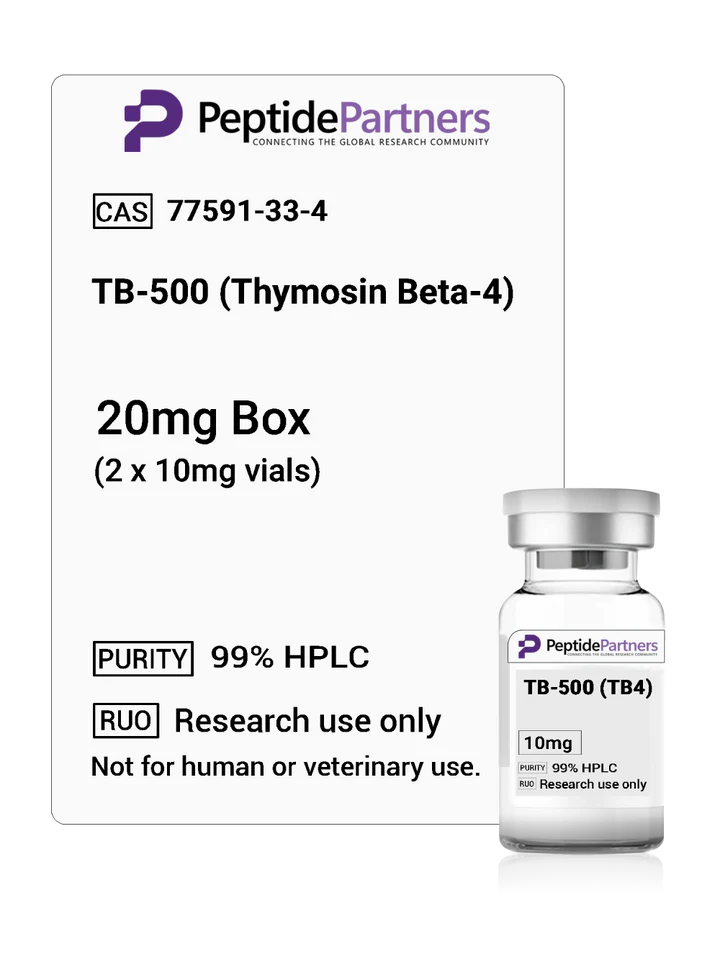
TB-500 (TB4, 10mg vials)
Price range: $130.00 through $490.00
• Purity: 99.76% (multi-vial, independently tested)
• Format: 10mg vials (3 mL capacity)
• Box Options: 20mg, 50mg, 100mg combinations
• Testing Status: Endotoxin, heavy metals & purity screening PASSED — Certified Endotoxin-safe
• Cost Efficiency: $4.90 – $6.50 per milligram
TB-500 (Thymosin Beta-4 fragment) is a synthetic research peptide investigated for its role in cytoskeletal dynamics, wound healing mechanisms, and regenerative signaling pathways in preclinical models. This research-grade material supports in-vitro experimentation focused on actin polymerization, cell migration assays, metabolite characterization, Integrin-Linked Kinase (ILK) activation, and analytical detection methodology development.
- Independent certificate details, manufacturer IDs, and batch IDs should be reviewed before purchase when available.
- Order cancellations for full refunds are available before shipment; shipped orders cannot be cancelled or refunded.
- For damaged or incorrect goods, photograph the outer packaging, inner packaging, and product labels, then email support within 48 hours of carrier delivery.
Buy TB-500 (TB4) Kit – Peptide Partners
Product Overview & Specifications
TB-500 (Thymosin Beta-4 fragment) is a synthetic research peptide investigated for its role in cytoskeletal dynamics, wound healing mechanisms, and regenerative signaling pathways in preclinical models. Peptide Partners supplies this research-grade material for in-vitro testing, laboratory experimentation, receptor pharmacology, structural biology, and preclinical cellular research.
Published studies have examined TB-500 using UHPLC-Q-Exactive Orbitrap MS/MS analytical methods, human liver microsome metabolism assays, rat urine metabolite profiling, fibroblast wound healing assays, cardiac cell migration studies, and Integrin-Linked Kinase (ILK)/Akt signaling pathway analyses. Research areas include G-actin sequestration, cytoskeletal organization, metabolite identification (Ac-LK, Ac-LKK, Ac-LKKTE), ILK activation, Akt pathway stimulation, and anti-doping detection methodologies.
The product name supplied for this listing is “TB-500 (TB4) Kit.” Researchers should verify the exact identity, sequence, formulation, and batch-specific certificate of analysis before beginning any experiment. Findings from published TB-500 studies should not be assumed to apply to every commercial batch or formulation.
Product Specifications
| Specification | Details |
|---|---|
| Product name | TB-500 (TB4) Kit |
| Compound type | Synthetic Thymosin Beta-4 fragment peptide |
| Primary molecular targets | G-actin, Integrin-Linked Kinase (ILK), Akt signaling pathway |
| Primary research areas | Cytoskeletal dynamics, wound healing mechanisms, cell migration, metabolite characterization, cardiac regeneration, ILK/Akt signaling, and analytical detection methods |
| Product format | 10 mg vials |
| Vial size | 10 mg |
| Vial capacity | 3 mL |
| Available box combinations | 20 mg, 50 mg, and 100 mg |
| Multi-vial purity | 99.76% |
| Independent testing | Yes |
| Endotoxin screening | Passed (Certified Endotoxin-safe) |
| Heavy-metals screening | Passed |
| Purity screening | Passed |
| Manufacturer ID | WF03 |
| Batch ID | TB202605 |
| Cost per milligram | $4.90–$6.50 |
The stated 99.76% purity is based on multi-vial testing. Researchers should review the batch-specific certificate of analysis before beginning any experiment.
Primary Research Studies & Findings
Simultaneous Quantification of TB-500 and Its Metabolites in In-Vitro Experiments and Rats by UHPLC-Q-Exactive Orbitrap MS/MS and Their Screening by Wound Healing Activities In-Vitro
Authors: Khandoker Asiqur Rahaman, Anca Raluca Muresan, Hophil Min, Junghyun Son, Hyung-Seop Han, Min-Jung Kang, and Oh-Seung Kwon
Publication: Journal of Chromatography B (ScienceDirect), 2024
DOI: 10.1016/j.jchromb.2024.124089
Reference: View publication
This study developed and validated a simultaneous analytical method for TB-500 and its metabolites using UHPLC-Q-Exactive Orbitrap MS. The metabolism of TB-500 was investigated in human serum, various in-vitro enzyme systems, and in urine from rats. The biological activities of the parent compound and its metabolites were assessed via cytotoxicity and wound healing experiments in fibroblasts.
The results indicated that Ac-LK was the primary metabolite in rats, while Ac-LKK was a long-term metabolite. No cytotoxicity was observed for the parent compound or its metabolites. Notably, only the metabolite Ac-LKKTE demonstrated significant wound healing activity compared to the control, suggesting that the reported therapeutic effects of TB-500 may be attributable to this metabolite rather than the parent form.
The findings establish a comprehensive analytical framework for TB-500 metabolite detection and provide mechanistic insights into which metabolites may be biologically active in wound healing models. The research demonstrates the importance of metabolite characterization in understanding peptide biological activity.
Plain-English Research Summary
Scientists have developed a new method to measure TB-500 and its breakdown products in the body. TB-500 is a substance that is thought to help with healing. In this study, they looked at how TB-500 is broken down in human blood and in rats. They found that one of the breakdown products, called Ac-LKKTE, is actually what helps wounds to heal, not TB-500 itself. This is an important discovery because it could lead to new and better treatments for wounds in the future.
Investigation of In Vitro/Ex Vivo TB-500 Metabolism, Synthesis of Relevant Metabolites and Detection Limits in Urine and Plasma
Authors: P. Van Eenoo
Publication: WADA Scientific Research, 2023
Reference: View publication
This project aimed to characterize the human metabolism of TB-500 using in vitro (human liver microsomes and S9 fraction) and ex vivo (human plasma/serum) models. The study found that TB-500 undergoes serial cleavage at the C-terminus, while the N-terminal acetylation provides protection. The researchers synthesized three metabolites, TB-500 M(1-2), TB-500 M(1-3), and TB-500 M(1-5), and a deuterated internal standard (TB-500-d3).
The limits of detection (LODs) for the synthesized metabolites were determined and implemented into a screening method for detecting peptides in urine, with LODs of 500 pg/mL for TB-500 M(1-2), 100 pg/mL for TB-500 M(1-3), and 50 pg/mL for TB-500 M(1-5). The research provides critical data for anti-doping laboratories to detect TB-500 administration through metabolite screening.
The findings demonstrate that TB-500 metabolism follows a predictable C-terminal cleavage pattern with N-terminal acetylation providing metabolic stability. The validated detection methods enable sensitive identification of TB-500 use in biological samples for forensic and anti-doping applications.
Plain-English Research Summary
Researchers studied how the human body breaks down TB-500, a substance sometimes used to enhance athletic performance. They used laboratory models of the human liver and blood to see what happens to TB-500. They found that the substance is broken down in a specific way, and they were able to create some of these breakdown products in the lab. This information was then used to develop a more sensitive test to detect TB-500 in urine, which is important for anti-doping efforts in sports.
Utilizing Developmentally Essential Secreted Peptides Such as Thymosin Beta-4 to Remind the Adult Organs of Their Embryonic State—New Directions in Anti-Aging Regenerative Therapies
Authors: Klaudia Maar, Roland Hetenyi, Szabolcs Maar, Gabor Faskerti, Daniel Hanna, Balint Lippai, Aniko Takatsy, and Ildiko Bock-Marquette
Publication: International Journal of Molecular Sciences, 2021
PMCID: PMC8228050
Reference: View publication
This review discusses the role of Thymosin Beta-4 (TB4) in regenerative processes, particularly in the context of cardiac repair. The authors highlight their findings that external administration of TB4 promotes myocardial cell migration and survival in embryonic tissue in vitro. This effect is retained post-natally and is attributed to a direct effect on cardiac cells.
The mechanism of action is partly explained by the activation of Integrin-Linked Kinase (ILK) and subsequent stimulation of Akt, which inhibits myocardial cell death. The review summarizes the growing body of evidence supporting the therapeutic potential of TB4 in cardiac regeneration and its potential to influence age-related changes in the heart and blood vessels.
The findings establish ILK/Akt signaling as a key pathway mediating TB4’s effects on cardiac cell survival and migration. The research provides a mechanistic framework for understanding how developmental peptides can influence adult tissue repair and regeneration in laboratory models.
Plain-English Research Summary
This paper reviews the exciting potential of a naturally occurring molecule called Thymosin Beta-4 (TB4) to help our bodies heal and even reverse some of the effects of aging. The authors’ research has shown that TB4 can encourage heart cells to move and survive, which is crucial for repairing damage after a heart attack. They found that this happens because TB4 activates a specific chain of events inside the cells that prevents them from dying. This research suggests that TB4 could be a promising new treatment for heart disease and other age-related conditions, essentially ‘reminding’ our adult organs how to heal themselves like they did when we were embryos.
Standard Research Disclaimer
Research Use Only. Not for use in diagnostic tests.
This product is solely intended for research purposes as a chemical compound. It is designated exclusively for in-vitro testing and laboratory experimentation. All information provided about this product is educational and should be evaluated by appropriately qualified research personnel.
By law, bodily introduction of this product into humans or animals is strictly prohibited. This compound must not be used, administered, or represented as a drug, food, dietary supplement, wound healing treatment, cardiac treatment, regenerative therapy, anti-aging product, performance-enhancing compound, diagnostic material, or medical treatment. It is not intended to diagnose, treat, cure, or prevent any disease. It should be handled only by licensed and qualified professionals in an appropriately equipped laboratory and in accordance with applicable laws, institutional procedures, and relevant safety requirements.
| Choose pack |
2 vials × 10mg (20mg total) ,5 vials × 10mg (50mg total) ,10 vials × 10mg (100mg total) |
|---|
- All of our manufacturing partners produce peptides using the Lyophilization (Freeze Drying) process, ensuring products maintain stability for shipping and storage for 12+ months.
- In lyophilized form, they are shelf-stable for many weeks. However, for long-term storage, it is recommended to store them in the freezer.
- We often hear concerns about the standard "discard after 28 days of first use" disclaimer. Don't worry, this has nothing to do with studies regarding the efficacy of specific peptides. 28 days is the FDA requirement for producers of multi-use vials to prove their bacteriostatic maintains efficacy. This minimum requirement becomes the de facto standard.
- In our experience, if you use proper sterile procedures and refrigerated storage, you can continue sampling from the same reconstituted vial for 3+ months.
Certificate records
No published certificate records are available for this product.
Search Certificate LedgerRelated products
BPC-157 (10mg vials)
Price range: $106.00 through $780.00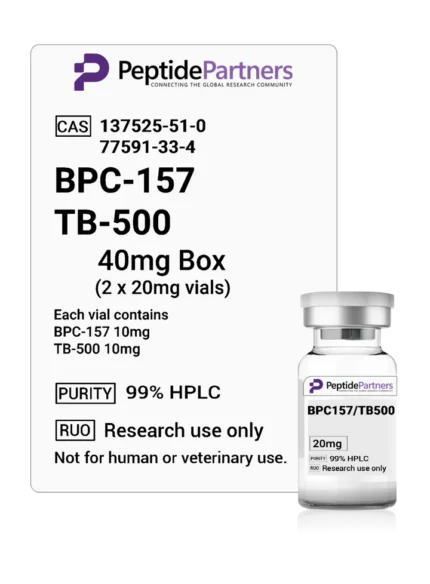
Combo Vial: BPC-157/TB-500 (20mg vials)
Price range: $224.00 through $880.00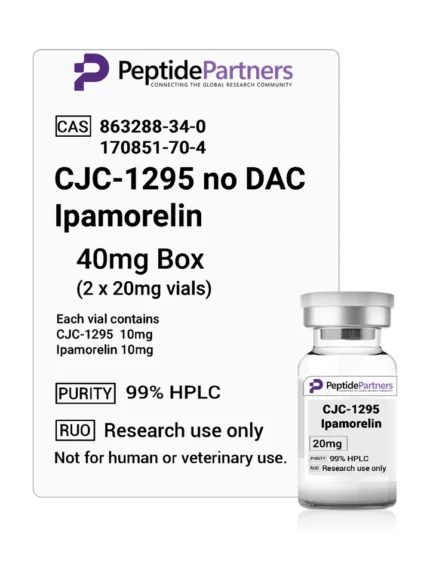
Combo Vial: CJC-1295 no DAC/Ipamorelin (20mg vials)
Price range: $220.00 through $877.00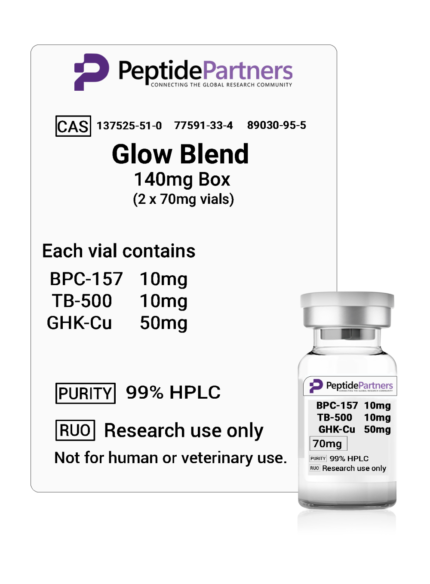
GLOW Blend: BPC-157/TB-500/GHK-Cu (70mg vials)
Price range: $182.00 through $770.00
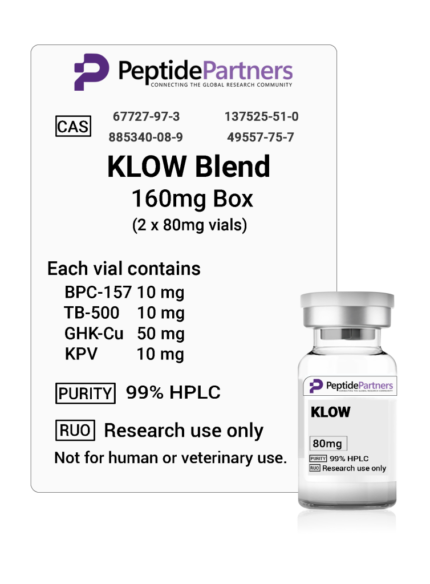
KLOW Blend: BPC-157/TB-500/GHK-Cu/KPV (80mg vials)
Price range: $240.00 through $975.00
